
Most Cummins faults are diagnosed from symptoms rather than from a code, particularly on older mechanical engines. This guide covers the failures we see most often, what each symptom usually means, and the parts that resolve it.
Excessive black smoke under load
Usual cause: the fuel system — worn injectors, a restricted fuel filter, a dirty water separator or an injection pump that is not delivering the correct volume.
Check first: the fuel filter and the water separator, then injector spray pattern. On an electronic engine, read the codes before replacing anything.
Parts usually needed: fuel filters, nozzles and injectors, and the fuel pump. See fuel system parts.
White smoke that does not clear after warm-up
Usual cause: coolant entering the combustion chamber — a failed head gasket, a cracked cylinder head or a warped head surface.
Check first: the coolant level and the oil condition, and whether the smoke clears once the engine is warm. A head gasket that fails at cold start and then seals when hot behaves differently from a cracked head, and it is worth testing properly before ordering a head.
Parts usually needed: cylinder head and head gasket set. See cylinder heads and gasket sets.
Overheating with a rising temperature gauge
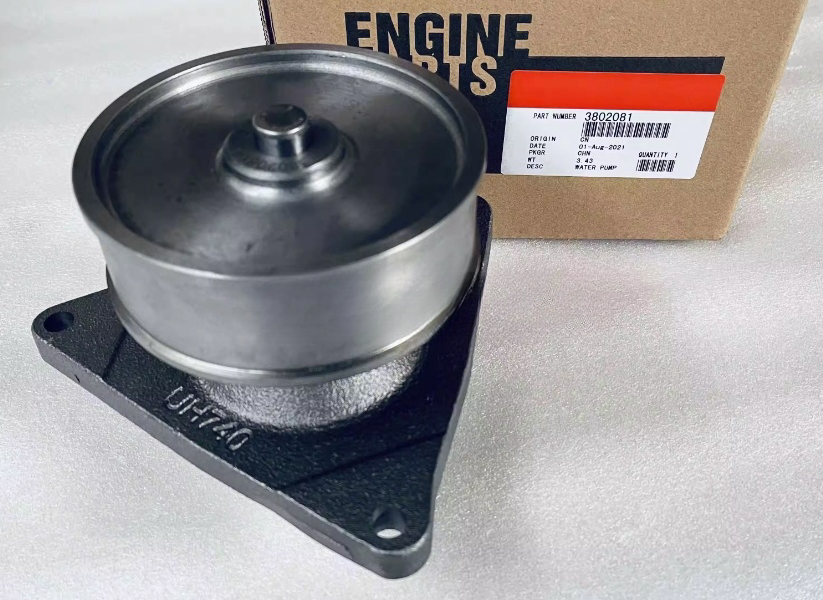
Usual cause: the mechanical water pump failing to move coolant, a thermostat stuck closed, a blocked radiator core, or a fan clutch that has slipped.
Check first: the coolant level and the condition of the coolant, then compare the outlet temperature with the inlet. A blocked radiator core is easily mistaken for a bad thermostat, and the radiator is the more expensive mistake.
Parts usually needed: water pump, thermostat, fan clutch, radiator. See cooling system parts.
Low boost, sluggish acceleration, hissing from the exhaust
Usual cause: the turbocharger — a failed actuator, a leaking oil feed or supply line, worn bearings, or a wastegate that is not holding.
Check first: the oil feed and drain lines, the actuator rod, and whether the exhaust pipe is split downstream of the turbine housing. An exhaust leak downstream of the turbo is often mistaken for a turbo fault.
Parts usually needed: turbocharger assembly, actuator, oil feed line. See intake and exhaust parts.
Low compression after an engine rebuild
Usual cause: worn or incorrectly matched piston rings, a head that has not been checked for flatness, valves that are not seating because of a worn seat or a wrong valve clearance.
Check first: a compression test on each cylinder before the head comes off. Uneven compression across the cylinders points at valves or rings; uniform low compression across all of them points at the head gasket or the head itself.
Parts usually needed: piston and ring sets, valve seats and guides, valve stem seals, head gasket. See pistons and rings.
Knocking that increases with load
Usual cause: the bottom end — bearing wear, crankshaft or connecting rod problems, or oil starvation reaching the bearings.
Check first: oil pressure at idle and at rated speed, and the oil level and condition. Knocking that gets worse as the engine warms up is a classic sign of an oil cooler or a failing oil pump feeding a hot engine.
Parts usually needed: main and connecting bearing sets, crankshaft, oil pump. See crankshafts and bearings and lubrication parts.
Belt noise and belt slip
Usual cause: a worn or glazed belt, a failing tensioner, or a misaligned pulley.
Check first: belt tension by hand and the tensioner travel. A tensioner that will not move through its full range is the item to replace, not the belt.
Parts usually needed: engine belt, belt tensioner, idler pulley. See belts and tensioners.
Electrical faults on electronically controlled engines
Usual cause: a failed sensor — oil pressure, water temperature or crankshaft position — or a wiring or connector fault.
Check first: the connector pins and the wiring loom before condemning the sensor. On these engines the sensor is a common replacement, but so is a corroded connector, and it is much cheaper.
Parts usually needed: pressure sensors, temperature sensors, position sensors, starters, alternators. See electrical accessories.
How to narrow it down before you order
Send us the engine model, serial number, a description of the symptom, and photos or a short video of the machine running. For electrical faults, the codes make the difference between a ten-minute diagnosis and a guess. In return we will tell you what we would test first, which part usually resolves it, and what it is sensible to keep in stock for that engine. See how to send us a part enquiry.
