
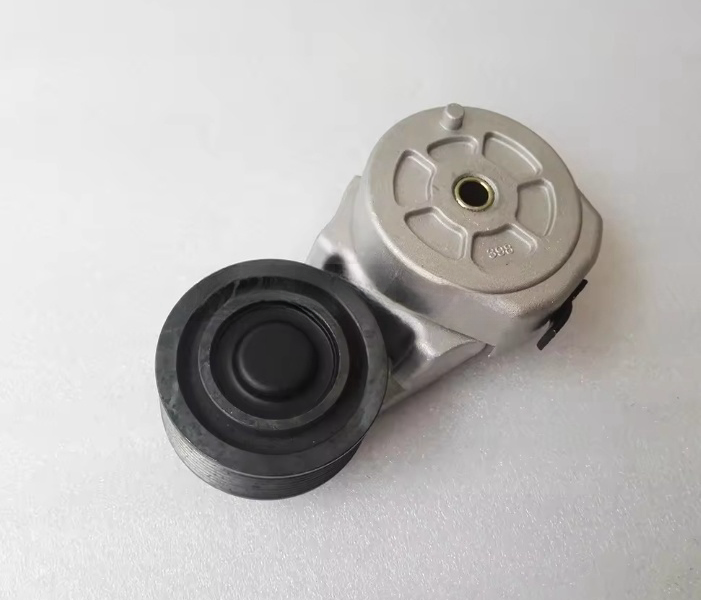
Belts are cheap, belts are easy to fit, and belts get replaced on their own schedule whether or not the tensioner is working properly. That is the source of most repeat failures: a new belt on a worn tensioner will fail again in a fraction of the time.
How the drive works
A belt transfers power from the crankshaft to the alternator, the water pump, the fan, the air compressor and the power steering pump. Tension is maintained by an automatic tensioner, which uses a spring and a friction or hydraulic element to push the belt into the correct running position. Idler pulleys guide the belt around the outside of the route.
Both the tensioner and the idler pulleys wear, and they wear at different rates. A belt that has been running on a worn idler will be polished on one edge and will squeal in a way that sounds like a tensioner fault.
Diagnosing before you replace
- Squeal on start-up only, which disappears after a few seconds, usually indicates a slightly slack belt or a tensioner that is slow to take up the slack.
- Squeal that comes and goes with load points at belt tension under load, commonly a worn tensioner or a worn idler.
- Visible glazing, fraying or a crack across the rib means the belt has been running correctly but has aged. Replace it.
- Rib wear on one side only or a shiny edge indicates misalignment or a worn idler pulley. Replace the belt and the pulley together.
- A tensioner whose arm will not move through its full range is the actual failure. Replacing the belt without replacing the tensioner will not fix it.
Why the tensioner matters more than the belt
A tensioner that has lost its spring tension lets the belt run loose. A belt running loose slips under load, which means the alternator, water pump and fan are not turning at the correct speed. On an engine that has overheated with a new thermostat, a slipping belt is one of the first things to check — a slipping water pump or a fan that is not turning at speed looks exactly like a cooling system fault, and it is much cheaper to fix.
What to keep in stock
| Item | Why | Typical symptom |
|---|---|---|
| Engine belt | Consumable, wears with every hour | Squeal, fraying, glazing, missing rib |
| Belt tensioner | Springs and bearings wear out; it is the item that actually causes repeat failures | Slap on start-up, squeal under load, arm not moving freely |
| Idler pulley | Polishes the belt edge and wears its bearing | Shiny belt edge, hum, heat at the pulley |
If you service the same engine family, holding the belt, the tensioner and one idler in stock turns a recurring callback into a same-day fix. We hold the common ones in the belts and tensioners category, including belt tensioner 4316726 and engine belt 5632991.
Getting the part right
Belt and tensioner numbers change between engine years and between the 6BT and 6BTA, and the tensioner is matched to the belt and to the engine variant, not just the engine family. Send us the engine model and serial number, or a photo of the tensioner label, and we will confirm the belt, the tensioner and the idlers as a matched set rather than as three separate guesses.
Related: common Cummins engine failures and how to cross-reference Cummins part numbers.
