
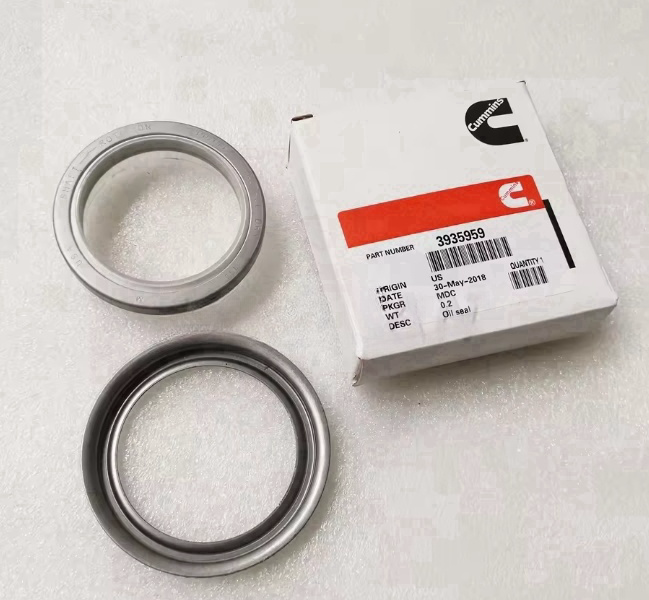
Ask three different workshops for a Cummins part and you will get three different numbers for what may be the same component. That is not confusion on their part: Cummins runs several numbering systems in parallel, and each one answers a different question. Once you know which system a number belongs to, the confusion disappears.
The four numbers you will meet
1. The OE part number
This is the number stamped on the part and the number you use to order. It identifies one specific configuration of one specific component. It is also the only number that is unambiguous, and it is the number we would like you to send.
2. The Controlled Parts List number
CPLs are the engine build configurations. A CPL links a piston number to a specific combination of engine build — the year, the rating, the emission standard and the variant. When a workshop tells you “the 6BT piston is 3906223”, that piston number is the starting point, and the CPL tells you which kit, ring set and seal set belong to it.
3. The Fleetguard filter number
Filtration runs on its own numbering system with its own service kits. A Fleetguard number is not interchangeable with an OE number even where the parts look identical, because the media specification and the housing differ. See the Fleetguard filter guide.
4. The supersession
Over time Cummins replaces part numbers. The old number still appears in old catalogues, on old engines and in old quotations, and the current replacement may be a different component rather than a like-for-like swap. This is the single most common reason a customer receives the wrong part: they quoted from a five-year-old catalogue.
How to trace an old number to the current one
- Read the number off the part — not from an old invoice, not from a previous quote, but from the physical part in front of you. A photo of the stamped number settles most disputes.
- Add the engine model and serial number, because the same part number can serve different variants and the serial number resolves the production period. See how to read a Cummins engine serial number.
- Ask what the part does on your engine — for example whether the head is a bare block or a complete assembly, whether the sensor is a 2-pin or 3-pin version, whether the timing kit includes the pulley. The same number can cover an assembly and its component.
- Check whether the part has been superseded, and if so whether the replacement is interchangeable or requires additional work.
Cross-referencing the versions
Because the same component exists in three versions, the cross-reference question usually has three answers, and the right one depends on the machine rather than the part:
| Version | What it is | When it makes sense |
|---|---|---|
| Genuine | Original Cummins part to current specification | Rotating and combustion parts on high-hour or high-consequence machines |
| ReCon | Genuine part remanufactured to the same specification, warranty backed, zero hours | Cylinder heads, crankshafts, turbos, complete engines, planned rebuilds |
| Aftermarket | Third-party part built to specification | Consumables and wear items where the duty cycle is moderate |
The detail behind these three options is covered in genuine versus ReCon versus aftermarket parts.
Working with us
Send us the number on the part and the engine it came off. We will confirm the cross-reference, tell you whether the number has been superseded, and quote genuine, ReCon and aftermarket options with the lead time for each. Send us the part number, the engine model and serial number, or a photo of the old part, and we will reply within one working day — see how to quote Cummins parts online.
Browse the parts we hold by system: cylinder heads, fuel system, cooling system, electrical accessories and filters.
